Introduction
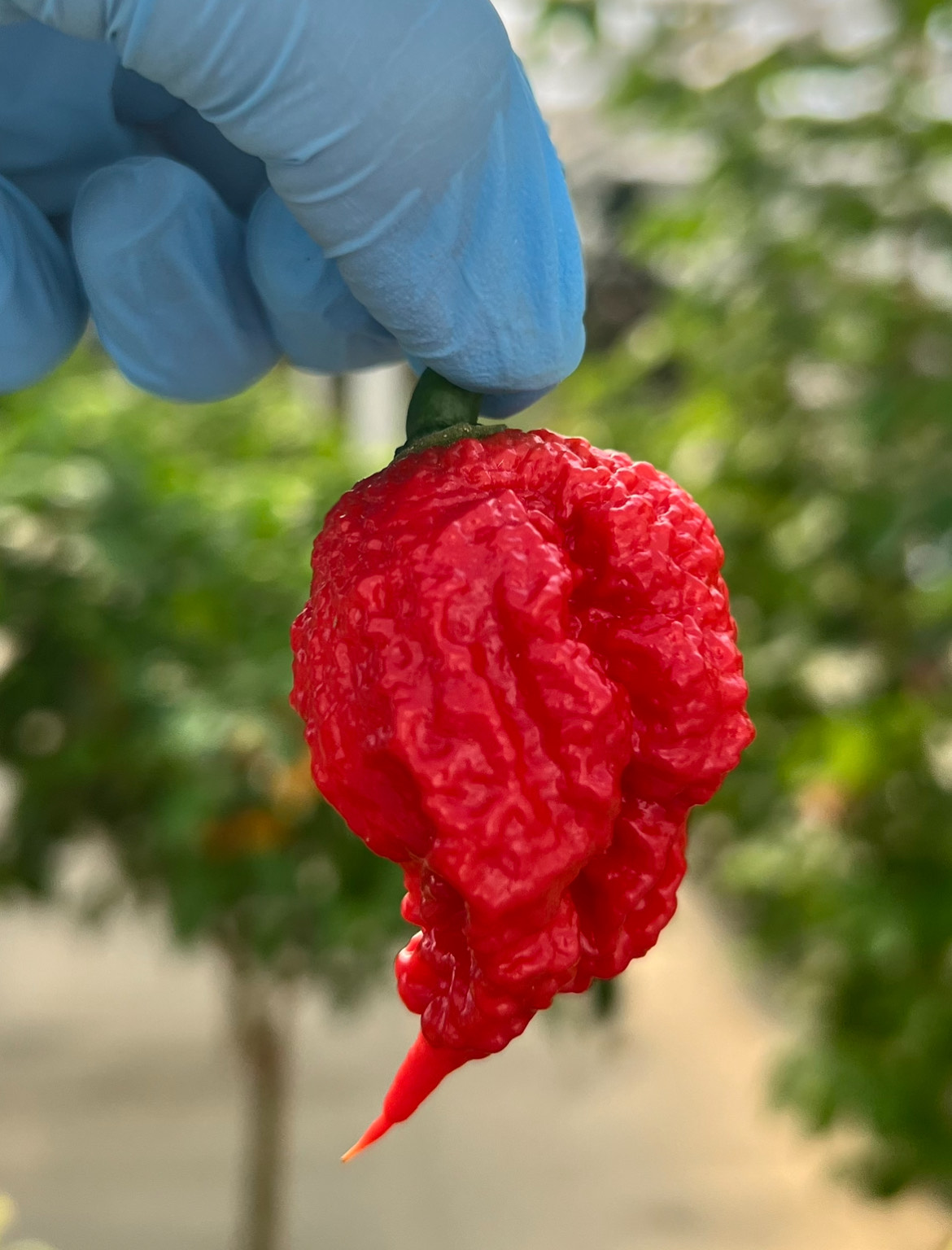
Grab a glass of milk and prepare for a fiery exploration of a chili pepper with undeniable heat and a reputation for pushing even the bravest spice enthusiasts to their limits. The legendary Carolina Reaper pepper is the hottest naturally occurring pepper in the world, and boasts both a fascinating history and surprising culinary versatility. A cross between a habanero and Naga chili pepper (ghost pepper), this hybrid measures in at over 1.4 million points on the Scoville Heat Unit Index, and has been known to actually send people to the hospital. Get ready to learn everything there is to know about the Carolina Reaper pepper, and dismantle the myths from the magic. We will delve into this pepper’s spicy origins, share some mouthwatering recipes, and explore some growing tips so that you can try your hand at growing your own. But let’s start with some history of hot peppers.
History
Hot peppers have been selectively bred by humans for thousands of years, with the development of hot varieties beginning in Mesoamerican civilizations around the year 5,000 BC. The modern era of pepper breeding likely started in the 1500s though, with the help of the Colombian Exchange, a hub of trade between the New World Americas and Afro-Eurasia, where plants, animals, metals, ideas, and disease were swapped. It was here that hot peppers were introduced to the world. Over the course of many generations, people continued to selectively breed peppers with higher levels of capsaicin, which gradually increased the heat, slowly progressing into the peppers that we have today.
It would seem that trying to breed the world’s hottest pepper as sport though, is a relatively new phenomenon. The movement got started as early as the 1990s, where the hottest peppers on record were the Scotch bonnet and the habanero peppers. These peppers both scored in at around 100,000-350,000 on the Scoville Heat Unit index, or SHU. The SHU scale is the international measure of spiciness. For a quick comparison, the jalapeno peppers clock in at around 2,500 SHU. This number is based on the concentration of capsaicin in any given pepper. To find the exact capsaicin content, peppers are dried, ground, mixed with a solvent, and then the capsaicinoids are measured in a machine in parts per million, or alternatively, the capsaicinoids are taste-tested by a panel of judges. Peppers do not have one fixed SHU number. This is due to natural variation, breeding practices, and testing limitations. Instead, peppers typically fall within a range, and this is how they are scored. Think of this range as a pepper’s potential heat.
The Race
By 1994, a new pepper was developed, called the Red Savina, scoring 550,000 on the SHU scale, and held the title as world’s hottest pepper from 1994-2006 in the Guinness Book of World Records. Like many of the superhots, this was a cultivar of the habanero pepper. By the early 2000s, a new grower stepped into the ring, named Ed Currie, who would change the ‘superhots’ game forever. Currie had been working on the Ghost Pepper, also called Bhut Jolokia or Naga King Chili, which made its official debut in 2007, and was then certified as the hottest pepper in the world by Guinness a few years later – a record it held until around 2011. This pepper maxed out at an average around 1 million SHU, the highest score the world had seen, with some outliers even reaching 2 million SHU. The Ghost pepper’s reign had ignited something of a fiery race for pepper growers around the world. Over the course of the next decade, countless chili growers would come forward claiming that their new pepper strain was the hottest, and Guinness would field hundreds of claims by growers vying for the crown. It would seem that everyone was after the title, with many simply claiming themselves victor. Ask Google, “what was the hottest pepper in 2014?” and you’ll find different sources will give you different answers and leave you scratching your head. So why the contention?
The world of superhots is complicated. Breeding new peppers takes time, and getting SHU scores verified takes even longer. There is typically a lag between the time it takes for a new pepper species to emerge and any official title change by Guinness. Newly bred peppers only reach stability after seven generations of seeds that produce offspring with matching capsaicin content. This takes on average, four years. Another issue is that Guinness World Records are not the only governing body when it comes to peppers. The Chili Pepper Institute of New Mexico has made record-breaking and unofficial claims regarding the world’s hottest peppers, and some independent growers make ‘unofficial’ claims as well. The Chili Pepper Institute even claims that Guinness will essentially honor any pepper whose grower will pay their fees. If true, this means that some of the peppers on Guinness’ list may be fraudulent. Growers are aware of the cash-grab that comes with the title of world’s hottest pepper, and may inflate their pepper’s SHU in order to capitalize. There is also a level of human error when it comes to SHU scoring. Taste test panel judges are supposed to dilute the capsaicinoids until its heat is undetectable, but judges may perceive spice differently, leading to score discrepancies. Some growers have even claimed that a large amount of cheating takes place within the industry, with capsaicin injections occurring right before testing. This, coupled with the fact that hot peppers contain lots of natural variation within their own species, means that capsaicin content can vary significantly. Essentially, no two Ghost peppers, or any other pepper, are exactly alike. Suffice it to say, conflicting data seems to come with the territory of hot peppers. I have done my best to synthesize the following information and put together a realistic timeline of superhot pepper breakthroughs.
Superhot Timeline
A Brief History of Heat
Tracing the timeline of the world's most ferociously hot chili peppers.
Recipes
Now that you know about the history of these hot peppers, let’s talk about some exciting ways that you can actually cook with them! Remember, wear gloves when handling hot peppers to avoid burning your skin. Never touch your face, especially your eyes, after handling peppers without washing your hands thoroughly with soap and water. Even a small amount of capsaicin oil can cause irritation and discomfort. Thoroughly wash your cooking tools and cooking space when you are finished.
While these peppers pack a serious punch, their reputation can often overshadow their surprising versatility in the kitchen. Superhots such as the Carolina Reaper boast a complex flavor profile beyond just heat, with hints of fruit and spice that can elevate a dish when used strategically. Let’s dive into some recipe ideas that will take you beyond the “dare to eat it raw” challenge and showcase the Carolina Reaper as more than just a heat source, but as a unique ingredient with the potential to transform your culinary creations. You can use any superhot, but my personal favorite is the Carolina Reaper. And remember, a little goes a long way. The 7 Pot Pepper got its name because it could provide enough heat for up to seven pots of chili. Superhot peppers can really elevate your homemade condiments. If you do not have immediate plans for your peppers, they can be frozen for up to six months, or you can try dehydrating them and grinding to powder form for later use.
Click here for my full Carolina Reaper Pepper Jelly Recipe.
Click here for my full Carolina Reaper Hot Sauce Recipe.
Click here for my full Carolina Reaper Salsa Recipe.
Growing Tips
Conquering the Carolina Reaper in the kitchen is a thrilling feat, but have you ever considered cultivating your own? Growing Carolina Reapers at home allows you to experience the entire life cycle of this amazing pepper, from nurturing a delicate seedling to harvesting your own batch of pods. While these fiery plants demand a bit more attention than your average bell pepper, a successful harvest is within reach.
Germination
Carolina Reapers thrive in hot, sunny locations with well-draining soil. Starting seeds indoors with a heat mat provides a head start, and mimicking their tropical origins with consistent warmth and humidity is essential. You will want to start your seeds about two months before your last frost of the year if you are growing plants up north. Keep your seeds between 80 and 85 degrees Fahrenheit and you should be good. You will need to create a humid and tropical environment while seeds germinate. You can do this by regularly misting your tray of seeds, and adding a lid over the tray. Your seeds should be fully germinated in about 2-3 weeks. And oh yeah, you will want to wear gloves while handling these seeds. Even the seeds have capsaicin residue and can burn your skin. An LED grow light is another essential for seed germination and young seedling growth. Seedlings need at least 14 hours of light per day.
Transplanting
You should aim for two transplants. Your first transplant can occur around the 5-week mark. Be sure to transplant them before they become root bound. Your next transplant will be to the plant’s long-term growing location. You can grow Reapers in a garden, raised bed, or any container. When transplanting outdoors, you will want to give your plants time to acclimate to their new environment. Start with 30 minutes of outdoor shade, and gradually increase the allotted time and sun exposure over the course of 2-3 weeks, until your plants are able to withstand a few hours of sunshine. This is the best way to help with the transition.
Watering and Fertilizing
Once established, regular watering and occasional fertilization with a balanced fertilizer will keep your plants happy. You can use water-soluble fertilizer or a slow-release. I prefer a water-soluble fertilizer that is rich in N-P-K. Fertilize your peppers every 2-3 weeks, or if you see signs of nutrient deficiency such as yellowing of leaves. Water the peppers as often as needed, and be sure that the soil is draining well. Be patient though. Reapers take longer to mature than other peppers. On the bright side, Carolina Reapers are relatively resistant to pests.
Hydroponics
I have had lots of success growing Reapers hydroponically, meaning without soil. In lieu of soil, try using a mixture of peat moss, perlite, and sand. This should keep your media nice and well-drained. Add liquid fertilizer to your irrigation, and ensure that your plants receive plenty of water throughout the day.
A Legendary Pepper
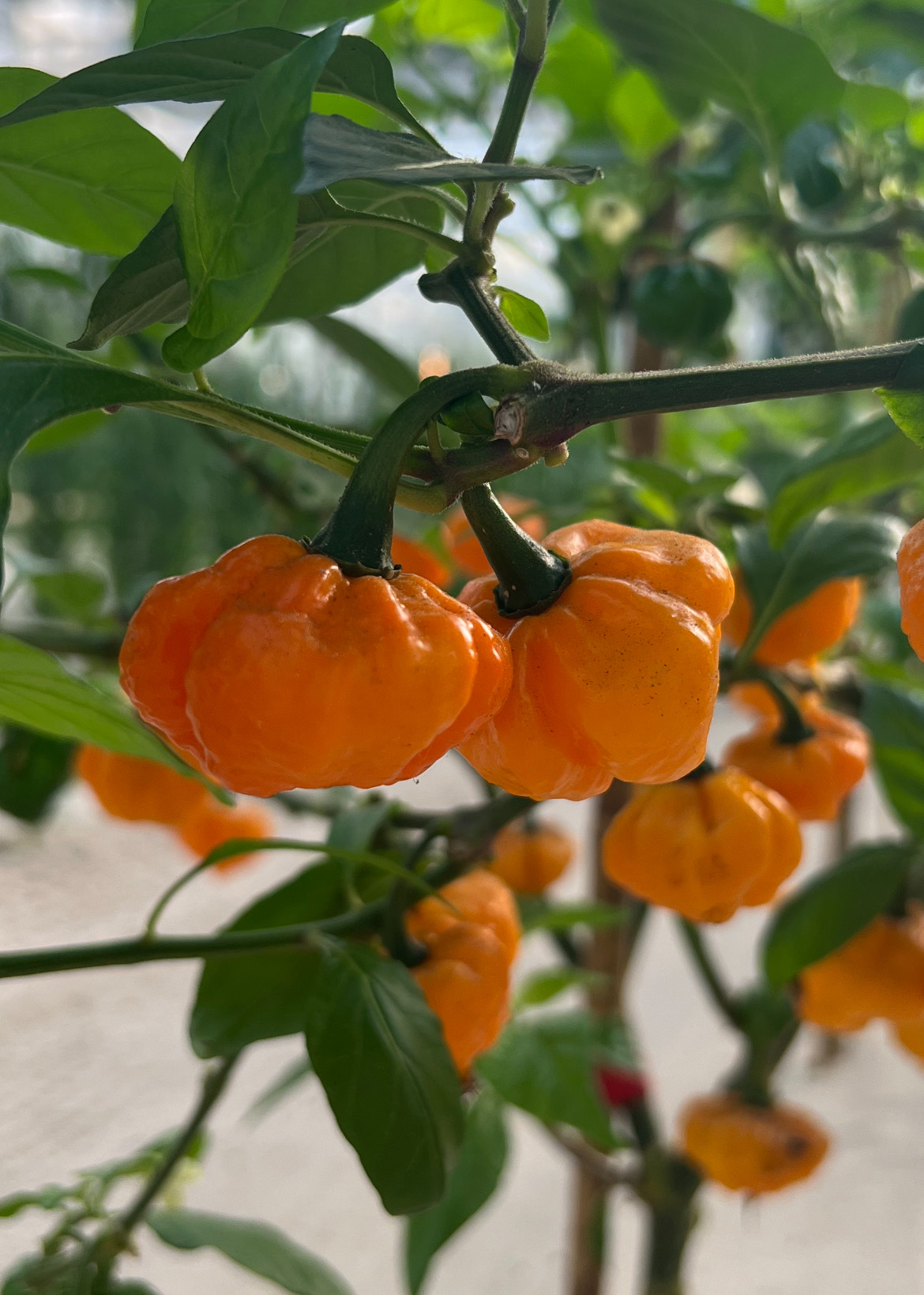
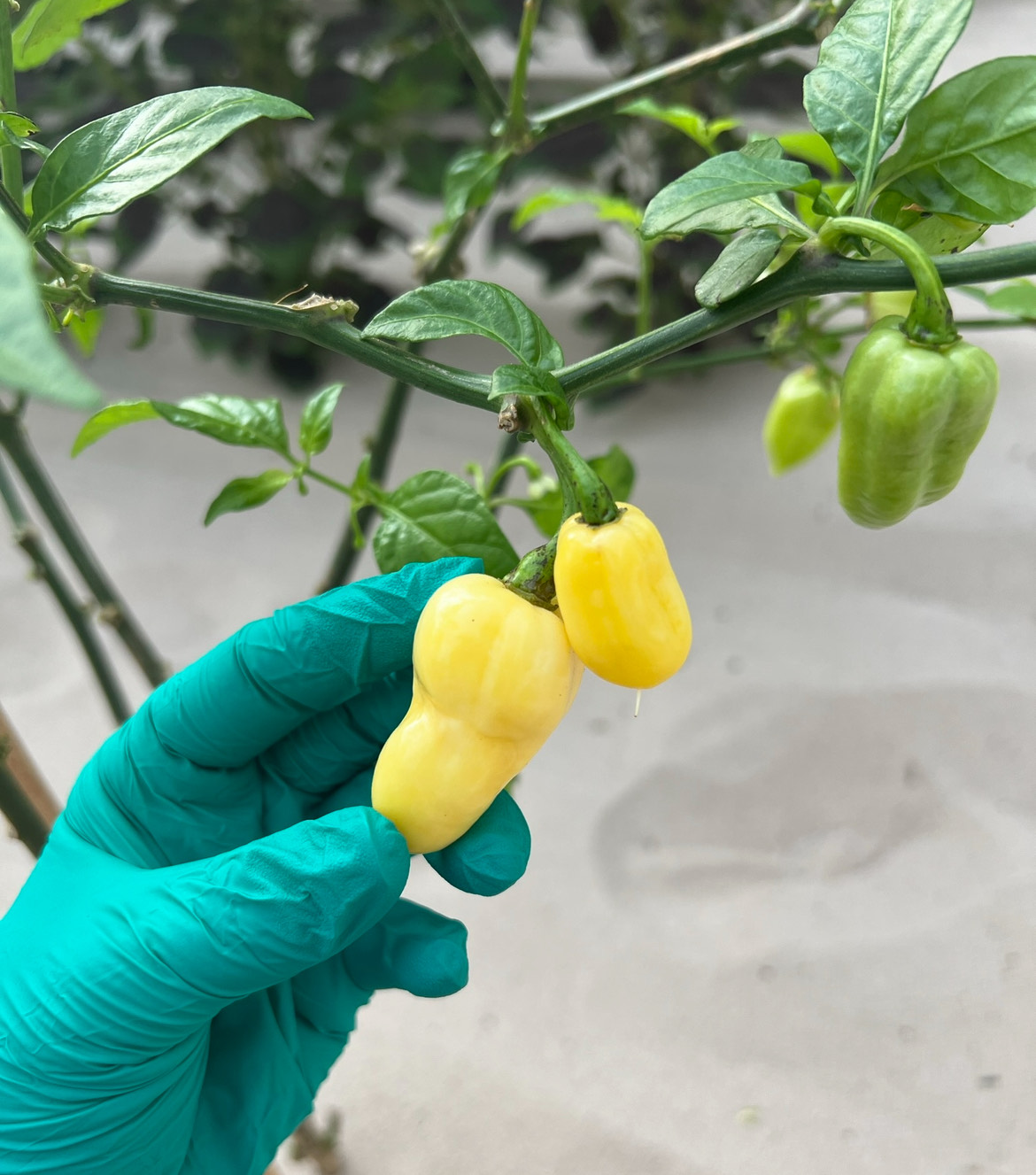
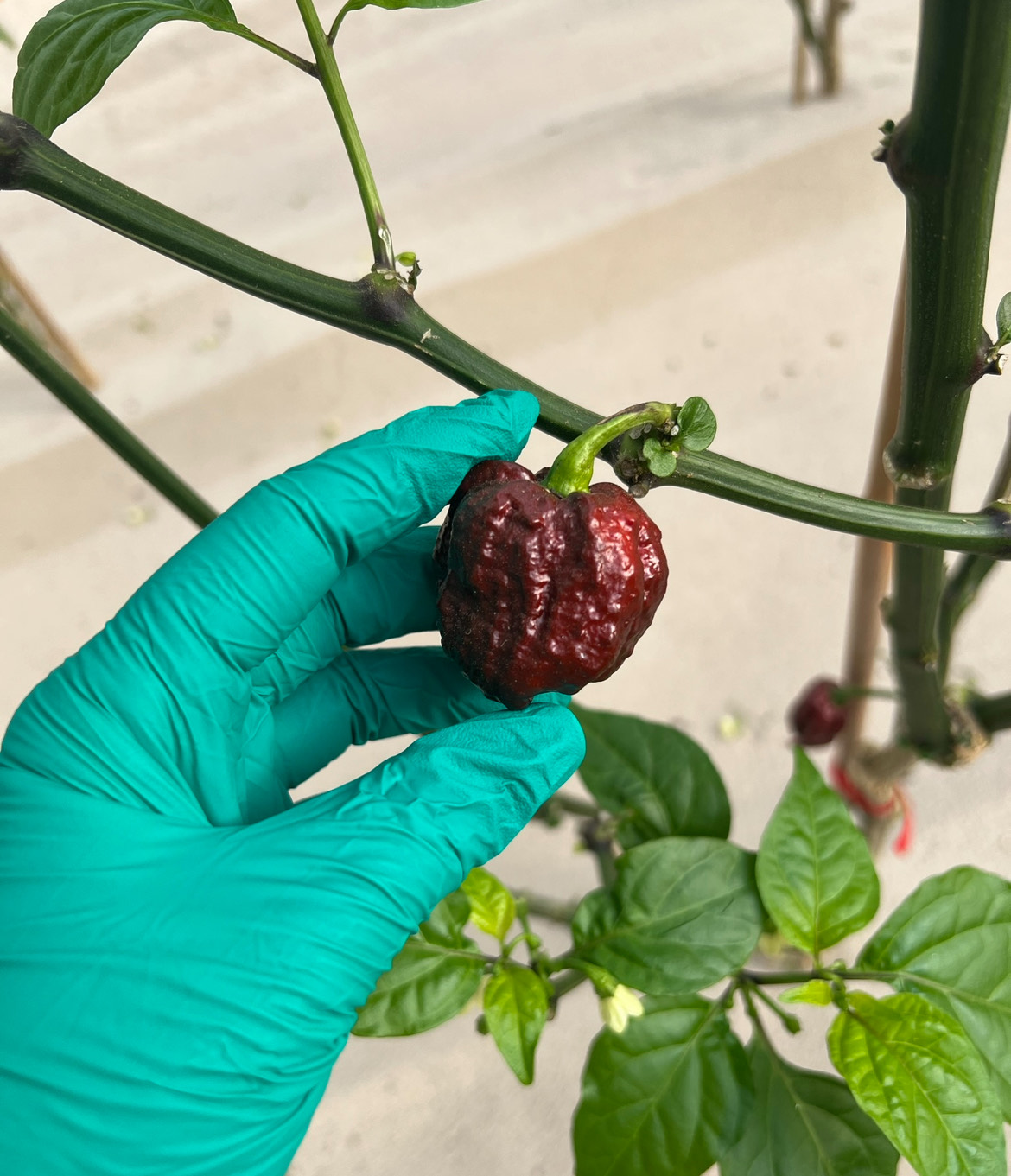
The original Carolina Reaper was red, but today you can find yellow, orange, chocolate, purple, and peach varieties as well. The peppers will start green and ripen to their final color, increasing in flavor and heat as they mature. These peppers have so much potential beyond the culinary spice realm. Capsaicin, the fiery compound within, is often extracted and used in self-defense pepper sprays for its potent deterrent effect. Its potential extends even to industrial applications such as anti-barnacle paint for boats or as a preservative for food manufacturing. And perhaps most exciting, research is exploring the potential of capsaicin in cancer treatment, although more research is needed.
While the fiery intensity of eating a Carolina Reaper pepper can trigger pain, the body also releases endorphins and dopamine, creating a pleasurable and euphoric rush akin to a runner’s high. Be warned though – side effects can include nausea, upset stomach, hallucinations, blistering, and burns.
So, the Carolina Reaper stands as a testament to human ingenuity and our love for pushing the boundaries of flavor and spice. Whether you’re a seasoned hot pepper enthusiast or a curious newcomer, this pepper offers a unique culinary adventure. With the help of these recipes and growing tips, you can experience the Carolina Reaper’s journey from seed to searing spice, both on your plate and in your garden.