The hum of a thriving apiary is a signature of nature’s tireless work, a sound intimately familiar to seasoned beekeepers like Donald Dees. Living in Aberdeen, North Carolina, and the owner of Dees Bees Apiary, Donald has dedicated thousands of hours to beekeeping, cultivating a deep understanding of their intricate world and the honey they produce.
From Childhood Passion to Bumper Harvests
Donald’s journey with bees began early. “I grew up helping on my uncle’s bee farm,” he shared. After years in an office job, he wanted something a little more active. “My brother was keeping bees, and I wanted to join, so I started this as a semi-retirement business, and I started with just a few hives. I’m up to nearly 100 now, and I invest several hundred hours a year into it.”
His dedication is certainly paying off. Most years see Donald celebrating a “bumper crop.” “Every year is different, but I have 70 or more producing hives that are heavily producing. This year I’ve collected more honey than I ever have before, and I still have a few more hives to check on.” He anticipates harvesting over 7,000 pounds of honey this season, a real testament to his expertise and devotion.
Donald defines a “production hive” as a 10-frame hive that has successfully wintered and initiated its spring buildup, usually in January. “They start on a slow cycle process with the queen laying eggs every day,” he explained. “By mid-March, the hive is full of 60,000 bees or more, just sitting there waiting for the first flowers to bloom in spring.” He noted that pollen from maple trees in the Sandhills in January prompts the worker bees to raise the temperature of the hive by a few degrees, which often triggers the queen’s increased egg-laying.
Navigating the harvest requires skill and understanding of bee behavior. “The blooming season is over, and the bees know it. They’re more food aggressive, or anxious, so I only check the hives right before dark. You have to be quick about it. And the bees will steal honey from other hives.” He’s always planning ahead: “Now is the time to be positioning yourself for next spring because the bees need time to be strong enough to replicate, build and grow, store food, and position themselves to make it through winter.”
How Honey Gets Its Color and Flavor
Honey is a remarkable reflection of the natural environment. Bees visit various flowers in search of nectar, which they then convert into honey. This direct link means that different nectar sources produce unique honeys, each with its own distinct color, taste, aroma, and more. He describes his honey as a hodgepodge blend of around 25 different wildflower sources.

Donald, like any experienced beekeeper, can often tell the honey’s origin just by sight and taste. “I uncap it and I can tell by looking at its color; I can have kind of an idea of what it is,” he shared. “My first honey of the season is typically American Holly honey, and its color is close to virgin olive oil with a light greenish tint. Its floral character was just outstanding this year.” He’s constantly sampling right from the comb, admitting, “I’m basically honeyed out from always taste-testing.”
The Unpredictable Purple Honey
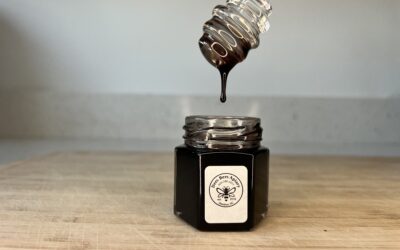
While Donald’s beekeeping business consistently thrives, each year also brings the anticipated, yet unpredictable emergence of purple honey. Its vibrant, head-scratching hue and elusive origins have captivated both beekeepers and scientists for decades.
“The plant doesn’t move,” Donald stated, highlighting the mystery. “The purple honey is produced sporadically, year to year from one area to another. It’s generally not always in the same area.” He recounted trying to place hives where purple honey had appeared previously, only for it to show up unexpectedly in new locations. “It’s not necessarily the location of the hive, but the randomness of where and what shows up in the environment. It’s just super random.”
Donald Dees and The Dearth
The question of purple honey’s origin often leads to speculation, with theories ranging from kudzu to redbud and elderberry. However, Donald’s extensive experience and observations have led him to a compelling conclusion that sets his theory apart.
“Of all the research that has been done on purple honey, they cannot identify a pollen that matches a nectar-producing plant at the time the purple honey is produced,” Donald pointed out. “Now, everybody and their brother will say they think that it is the kudzu plant. But it can’t be. Kudzu doesn’t even bloom when the purple honey is made. Others say it’s the sporadic growth of the sourwood plant. But for me, the lack of pollen indicates it might not be a flower at all. It might be something else. And that’s where the berry theory comes in for me.”
Donald links the purple honey production to a critical time for beekeepers: the dearth. This is the mid-summer dry period in North Carolina when temperatures are high, rainfall is scarce, and few flowers are in bloom. “The sourwood is very temperature and humidity dependent, and in those hot and dry years, it withers quickly. We call that the dearth period when there’s no blooming plants available.”
While sourwood might not be the source, its timing is significant. “Now I mention the sourwood theory as a reference to the point of time of the season because it’s generally the last thing that blooms before purple honey starts showing up,” Donald elaborated. “And I think because that is the last flower that blooms, I believe most people associate purple honey with the actual sourwood nectar or the sourwood plant itself.”
Donald’s theory hinges on what happens when other nectar sources disappear. “If there is a natural and flower-based nectar available in the environment, the bees know it; they’re going to that before they go to anything else,” he emphasized. “But if the berries are available after the sourwood quits producing nectar, and it’s all dried up ’cause of the heat, the only thing that’s left is the berry. And this is what I saw last year.” He specifically points to blueberries as a key suspect. Donald believes the slight tanginess sometimes found in purple honey comes from the interaction of berry nectar with existing sourwood honey in the cells. You can read more about purple honey formation and theories here.
A Beekeeper’s Holy Grail
Donald’s initial encounter with purple honey was unforgettable. “It was the last thing I expected to see,” he recalled. While doing maintenance on a hive, he spotted an oddly colored frame. “When I took it out, I noticed it was purple. I was like ‘oh my gosh, I’ve got purple honey!’ It’s like getting a lottery ticket that’s a winner. It’s that same excitement and adrenaline rush.” That single hive yielded 40 pounds of purple honey, yet six other nearby hives produced none. This, he explained, is likely due to the bees’ hive-specific communication about food sources.
Interestingly, the bees themselves adore the purple honey. “You can’t shake the bees off of a purple honey frame. They love it. There’s just something about it for them.”
Donald’s Scientific Pursuit (and His Silence)
With his background in lab technology, Donald isn’t just hypothesizing; he’s gearing up for a scientific pursuit. He plans to conduct his own scientific tests, implementing precise controls and testing multiple variables to pinpoint exactly how the purple honey is made, once and for all.
However, the results of this groundbreaking research will remain his closely guarded secret. Donald has no intention of sharing his definitive findings with the public. His purple honey is all-natural and ethically sourced, a genuine product of his bees and the Sandhills microclimate. He feels strongly about protecting his unique process from those who might try to replicate it artificially. Indeed, he finds it hard to watch the false marketing of other “purple honeys” currently on the market, knowing that many are fakes made with food coloring.
The Sandhills Microclimate
The unpredictability of purple honey is compounded by the unique environment of the Sandhills. “In the Sandhills, there’s a lot of radiant heat; it is such a specific microclimate here,” Donald explained. “The bees’ honey production cycle can be different from a hive just 10 miles away.” This localized diversity, from sand to red clay and varying plant life, means each honey harvest has a distinct flavor profile.
Donald fully embraces the unpredictable nature of his craft. “The unpredictability is really not knowing when or where or if you’re going to make it that season,” he acknowledged. “I receive hundreds of calls and messages on social media asking about when the purple honey is going to be available, but it’s just one of those things that you just don’t know about. You’ll know it when it shows up.”
To ensure his bees thrive even in dry years, Donald has strategically placed his hives near groundwater sources like “swamp bottoms, creeks, beaver ponds, rivers.” He even looks for tulip poplars, which indicate moist underground conditions. “If it doesn’t rain, it doesn’t affect my operation too much.”
While purple honey is universally rare, Donald humorously admits, “It’s hard to say it’s rare if you’re getting it every year.” Since he started beekeeping, he’s managed to produce some purple honey almost every season, a testament to his expertise and keen observation. This consistency, however, doesn’t diminish its allure or the mystery surrounding its exact origins.
An Enduring Mystery
Ultimately, while Donald’s theories offer compelling insights, the truth of purple honey remains largely shrouded in mystery. “The variables are what drives the purple honey,” he states, “which is precisely why it is so difficult to fully understand. It all depends on the environmental conditions of each season.”
For Donald, one of the most rewarding parts of his entire operation, gold or purple, is the connection with his customers. He finds immense satisfaction in their loyalty and appreciation. They recognize, respect, and love the authentic, quality products he tirelessly creates, a bond built on trust and the shared enjoyment of nature’s candy.
Want to try some purple honey for yourself? Dees Bees Apiary has it available for purchase on their website, but remember, its availability is seasonal and extremely limited. A small hex jar typically costs around $60, while a 3 oz jar is about $70. If you see it in stock, act fast – it usually sells out quickly. You can find Donald’s purple honey and much more on his website: https://deesbeesapiary.com/shop.